
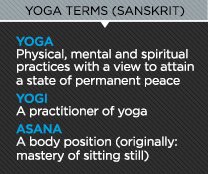
Don't give in to your foam mat phobia! Adding yoga to your workout regimen can help increase your flexibility and overall health. Learn the yoga jargon, choose a style, and you'll be ready for the studio.
Yoga is all the rage, and for good reason. Anyone who has seen a
little old lady wrap her feet around her head cannot help but feel a
little impressed. You might be ready to join the fun, but you're also
feeling a little intimidated. Do I have to wear yoga pants? Is the
instructor going to make me do a headstand on the first day? What the
heck does "namaste" mean?
Don't worry, you don't have to be a hard-core yogi to unroll your mat
and hit a pose. Men, women, pro athletes, and nine-to-fivers alike have
all hopped on the yoga bandwagon. The variety of styles allows
beginners, gurus, and everyone in between to benefit from this ancient
practice.
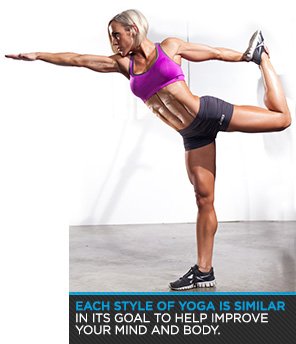
Although each style of yoga is similar in its goal to help you
increase your range of motion, body awareness, and mental health, they
all differ in their approach. If you're not sure which style is best for
you, here's some help. Try one or try them all, but just try!
Hatha (Ha-tha)
Hatha yoga is an umbrella term that refers to a number of different
branches all geared toward prepping the body for meditation. It focuses
on calming the mind, reduces muscular stress and tension, and creates
greater mind-body balance. Because all yoga styles are derived from
Hatha, it's great for beginners. The pace is slower, and the focus is on
breathing and learning new poses. Intermediate to advanced
practitioners can also benefit from the challenge of perfecting their
poses and holding them for longer. If you do intense workout sessions on
a regular basis, some Hatha yoga might be a great addition to your
regimen. Relax, increase your flexibility, and learn some new skills.
Ashtanga (eh-SH-tang-e) Vinyasa (vin-YAH-sah)
Are you looking to drop a couple lifting days in exchange for
something new? One of the most intensive yoga variations, Ashtanga,
could replace a few of your strength training sessions—if you're up to
the challenge.
This variation is made up of a series of six different pose
sequences. Yogis move between them relatively quickly. The quick
transitions and particular breathing technique will challenge your
cardiovascular fitness. Unlike other, more relaxing styles, this series
leave you feeling like you just got a great workout. If you're trying to
lose weight, Ashtanga Vinyasa yoga would be a great choice.
Bikram (BIK-ram)
Turn up the heat and fill up your water bottle for Bikram yoga. This
type, often referred to as "hot" yoga, is practiced in studio at 40.6
degrees Celsius or 105 degrees F— that's hot! During the 90-minute
class, yogis do 26 movements and two breathing exercises. You torch
calories and get your sweat on.
Bikram practitioners enjoy the heat because higher temperatures make
muscles more limber and pliable, enabling a deeper stretch. The heat
also helps detoxify your body through perspiration—you'll discover sweat
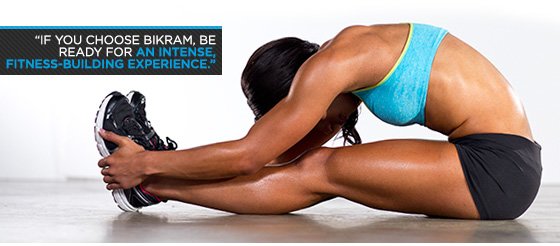
glands you didn't even know you had! If you choose Bikram, be ready for
an intense, fitness-building experience.
Iyengar (i-YEN-gar)
Aches and pains? Iyengar, also known as restorative yoga, emphasizes
healing and realignment through supportive postures and sequences. This
variation uses a number of props, such as wooden gadgets, belts, and
ropes to add variety and movement precision. Iyengar borrows from
Ashtanga and combines them to create different groups of asanas, or
movements.
Aside from the variety, this style of yoga is also great for people
who are recovering from an injury. The props allow for greater control
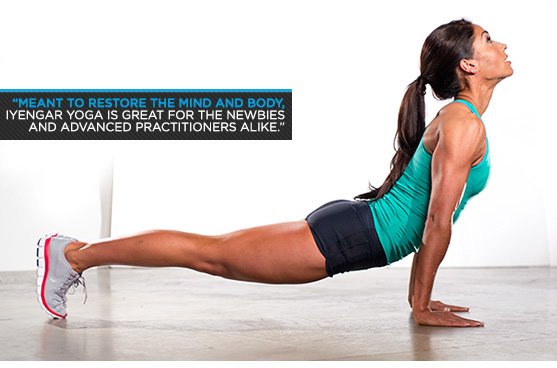
in the movements and less stress on the muscles. Meant to restore the
mind and body, Iyengar yoga is great for the newbies and advanced
practitioners alike.
Power
In the West, power yoga is a fitness-based approach to Vinyasa-style
yoga. It closely follows the intensity of the Ashtanga method, but is
much less meditative than traditional styles. Most neighborhood gyms
offer classes in power yoga, which set the yoga trend ablaze.
Power yoga focuses on strength, so it's ideal for those looking to
increase muscle development. You'll also increase your metabolic rate
and get that coveted post-workout calorie burn. Although it's no
substitute for weight training, add it to your regimen for a fresh
flavor. It's also great for those who can't access a gym or who can't
train with weights due to an injury.
Yin
For people with high daily stress or chronic pain, this variant is
ideal. It focuses on lengthening connective tissue through relaxation
rather than building muscular strength. This style encourages joints to
reach full flexion and extension, which alleviates muscular tightness
and joint pain. If you're plagued with tightness or chronic injuries,
Yin is the Yang to your weightlifting routine.
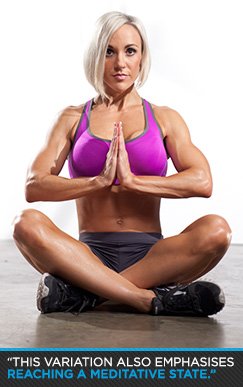
This variation also emphasises reaching a meditative state. You'll be
holding poses anywhere from 5-20 minutes. The long poses, though
relaxing, may not be well-suited for the beginner or the faint of heart.
Prenatal Yoga
Just as the name suggests, prenatal yoga is for mommies-to-be. This
style of yoga adapts traditional, Hatha poses to be gentler and less
stressful for both the developing baby and the mother.
It is recommended that pregnant women get 30 minutes or more of
moderate exercise per day, unless they're under particular medical
restrictions. Physical activity not only keeps mom healthy, but can
improve her posture, decrease pregnancy discomfort like back pain and
fatigue, relieve stress, and develop stamina needed for labor and
delivery. Practicing yoga is a great option for daily activity,
especially if you want an alternative to strength or aerobic training.

No comments:
Post a Comment